Saturday, 1 July 2017

Seville - Spain

Seville

Location:In the Andalusia region of southern Spain
The Real Alcazar de Sevilla
The city is situated in the fertile valley of the Guadalquivir River. The average height above sea level is 7 metres (23 feet). Most of the city is on the east side of the river, while TrianaLa Cartuja and Los Remedios are on the west side. 


The Aljarafe region lies further west, and is considered part of the metropolitan area. The city has boundaries on the north with La RinconadaLa Algaba and Santiponce; on the east with Alcalá de Guadaira; on the south with Dos Hermanas and Gelves and on the west with San Juan de AznalfaracheTomares and Camas
The Real Alcazar de Sevilla

Climate:
Seville has a drier summer and wet winter. The annual average temperature is 25.4 °C (78 °F) during the day and 13 °C (55 °F) at night. Summer season can lasts from May to October, the latter in spite of the dwindling daylight and inland position.

If you are travelling in winter you still need to take warm jacket for the evening.
The streets are mainly cobbled or block paved and can be very broken/uneven. Recommend taking some sturdy walking shoes.

While there are many local buses that go just about anywhere and a tram that covers a short route.


There are a couple of tourist sight seeing bus company's that can give you are guided tour of the main attractions. Tickets from 16 euro allow you to hop on/hop off all day. Good idea if you are not sure is to take a route all the way round to get you bearings and also to see what's on offer. The maps don't always give such a good idea of proximity and what there is on offer.
Red Bus - City Sightseeing (free entrance into certain locationsm see ticket/web for details)
Green Bus - Sevilla Triana (special offer 48 hour ticket) Jan 2017
With small headphones included there are multiple language audio guides enroute.

Saturday, 25 April 2015

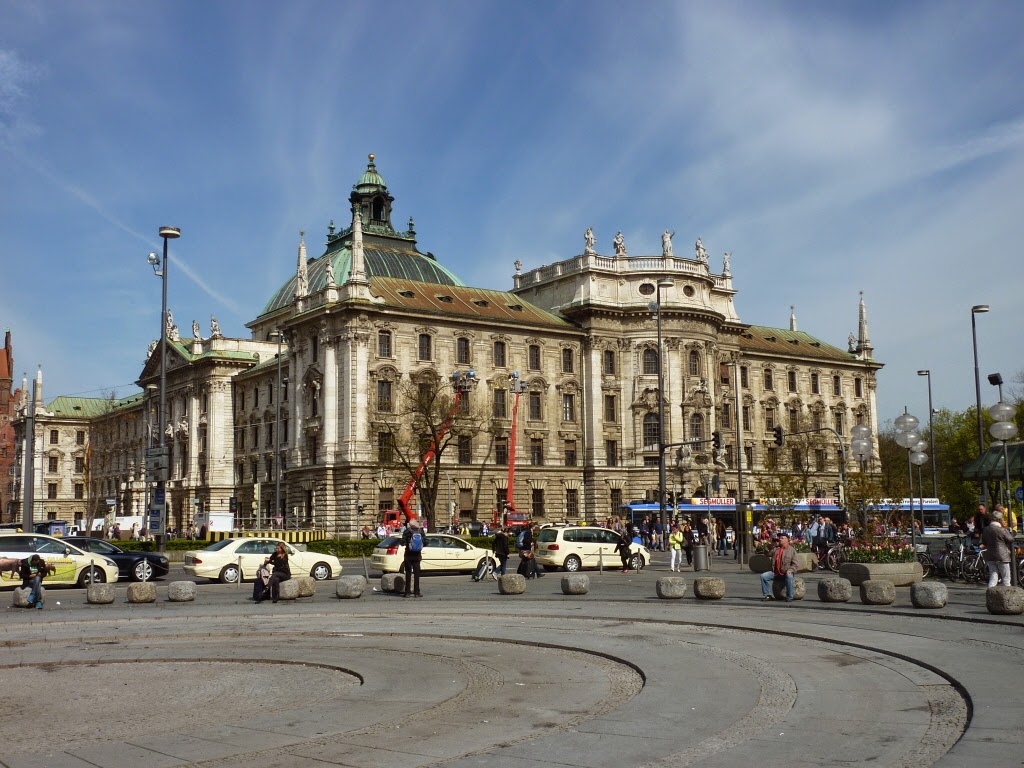
Munich,Germany


Munich is home to many national and international authorities, major universities, museums and theaters. Its numerous architectural attractions,sports events, exhibitions, conferences and Oktoberfest attract tourism. Since 2006, the city's motto has been "München mag dich" ("Munich loves you").

A mix of old and new buildings.
From the 1100s to current constructions they vary in style size and every combination possible
(see BMW building lower down)
It has a very diverse community from all walks of life.


The name of the city is derived from the Old High German term Munichen, meaning "by the monks". It derives from the monks of the Benedictine order who ran a monastery at the place that was later to become the Old Town of Munich; hence the monk depicted on the city's coat of arms.


South and North views from the fountain albeit it was switched off on the weekend we were there.

You can always find a taxi and there are dedicated taxi ranks at many locations all around the city.
Prices were very reasonable at the time or writing.


One of the best ways of getting around is on the trams (Munich Transport Company, or MVG)
The tram network interconnects with the bus network, Munich U-Bahn and Munich S-Bahn.
You can buy a ticket for a day or more that will allow you to use any of them so you can hop on and off at any time.


There are many 'beer houses,gardens' in Munich. One of the most famous is the Hofbräuhaus. 
The first one built in 1589 on the site of the
Munich royal residence of that time lasting until 1808. The second one built opposite the old Orlandohaus in the the Platzl. Maximilian I square, not far from the original site.


BMW sales showroom and cafe just across the walkway from the BMW museum on the site of the Olympic Park.
If you are into cars then allow yourself a few hours just for the museum alone.
9 euro entry (2015)

Tuesday, 30 December 2014

Snow and Ice sculpture festival Brugges / Bruges, Belgium

Snow and Ice sculpture festival, Station Bruges
very year from the end of November to January The festival is built by an international team of 40 professional artists from no less than 300 tons of crystal clear ice and 400,000 kilos of fresh snow in a cooled hall where the temperature remains a constant -6°C. 
Don't forget to wear warm clothing  Fees from 11 - 15 EUR.


With the theme of “The Land of The Hobs”, “Ice Magic” takes the visitor into the mythology of dwarves, elves, fairies, hunters, magicians and devilish figures in a world that is as fantastic as it is mysterious.


It includes surprising characters and animals, which live in their own hidden world surrounded by inhospitable nature and mysterious forests etc. as well as appealing and spirited figures that emerge from their fairy-tale world.


Official website
http://www.ijssculptuur.be

Saturday, 20 December 2014

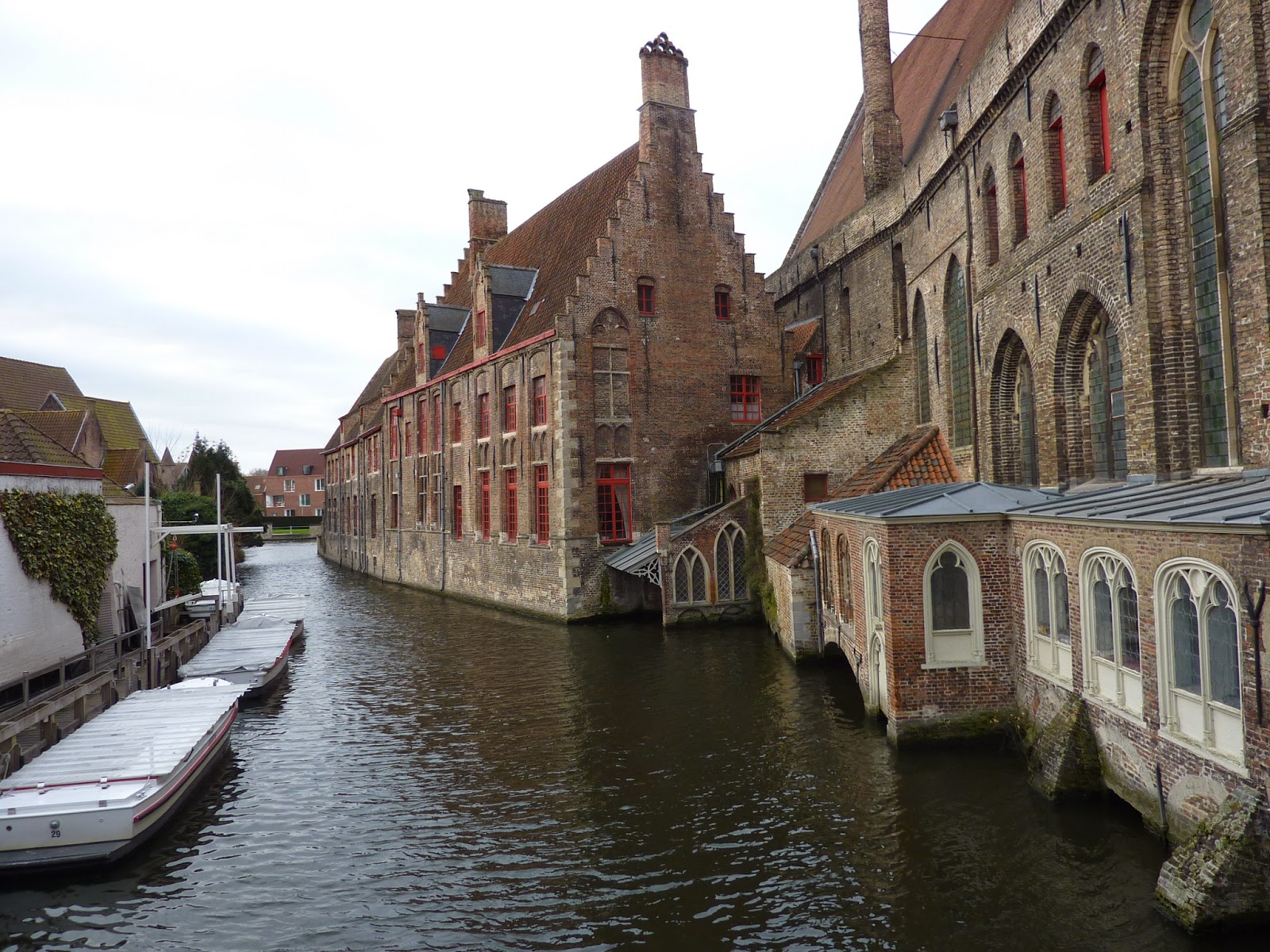
Brugges / Bruges, Belgium


Bruges is the capital and largest city of the province of West Flanders in the Flemish Region of Belgium. It is located in the northwest of the country.

Grote Markt and Belfry Climb, Grote Markt (the big square). 09:30 - 17:00. Climb the 366 steps to the top of the 83-metre high tower. Excellent views of the city, Grote Markt and hear the bells ring up close. €6 with Bruges card / €8.


Weather
Bruges has a poor reputation for its weather. Compared to other western European cities like London and Paris, the weather in Bruges is colder and more damp.July & August, average daily maximum temperatures struggle to exceed 21°C (70° F) and rainfall averages 203mm (8in) a month.
After October temperatures drop off quite rapidly and winter months are damp and chilly.
Summer visitors should always be prepared for rain 

Christmas Market
When: 21 November 2014 to 02 January 2015
Where: Christmas Market & Ice Rink, Market Square (Grote Markt) and Simon Stevinplein
Open: Monday, Tuesday, Wednesday, Thursday and Sunday from 
10:30 - 22:00 and on Friday and Saturday from 10:30 - 23:00

The Beguines (nunnery) were a religious movement of single or widowed women who wanted to live in a pious way but outside the walls of a convent or monastery. So in many north Belgian and Dutch cities so called Begijnhofs were set up where these women lived and prayed. It is still used by women who live in the lime-washed cottages surrounding the central green,

A boat tour will show you places which are otherwise unreachable, as not every canal runs next to a street. Advisable to get there at opening time to avoid the 
crowds. €7.60 plus almost obligatory tip to the driver/guide.  

You'll find 5 boat companies located inside the tourist center:

Venetië van het Noorden on Huidenvettersplein
Coudenys on Rozenhoedkaai
De Meulemeester in Wollestraat
Gruuthuse in Gruuthusestraat
Stael in Kathelijnestraat

The Ferris Wheel can be found just on the outskirts of the main town centre and is only a 5 minute walk from the the Tourist Information office

Opposite this (2014) was located the Snow and Ice sculpture festival, Station Bruges,
Every year from the end of November to January The festival is built by an international team of 40 professional artists from no less than 300 tons of crystal clear ice and 400,000 kilos of fresh snow in a cooled hall where the temperature remains a constant -6°C. Don't forget to wear warm clothing 11 - 15 EUR.

Watch the film 'In Bruges'[2008] for a brief insight 
(warning contains scenes of violence)

Wednesday, 19 September 2012

Palace of Versailles, Versailles - Île-de-France


The Château de Versailles, which has been on UNESCO’s World Heritage List for 30 years, is one of the most beautiful achievements of 18th-century French art. The site began as Louis XIII’s hunting lodge before his son Louis XIV transformed and expanded it, moving the court and government of France to Versailles in 1682. Each of the three French kings who lived there until the French Revolution added improvements to make it more beautiful.


The Hall of Mirrors, the King’s Grand Apartments, the Museum of the History of France. The Château de Versailles, the seat of power until 1789, has continued to unfurl its splendour over the course of centuries. Originally a humble hunting lodge built by Louis XIII. Louis XIV chose the site to build the palace we know today, the symbol of royal absolutism and embodiment of classical French art.

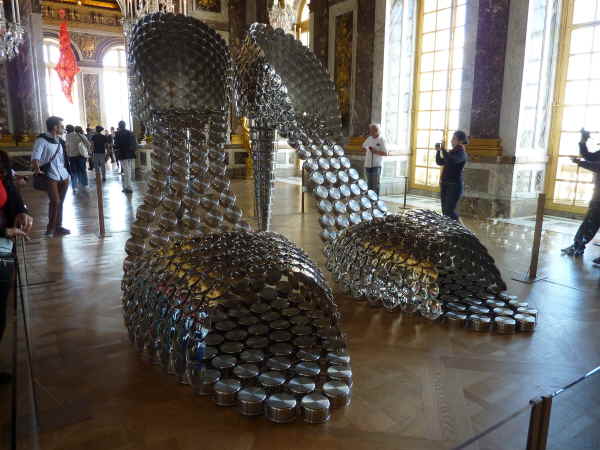
These shoes are made from stainless steel saucepans and lids.
From the central window of the Hall of mirrors the visitor look down on the grand perspective that leads the gaze from the Water Parterre to the horizon. This original perspective, which preceded the reign of Louis XIV, was developed and prolonged by the gardener André Le Nôtre by widening the Royal Path and digging the Grand Canal. This vast perspective stretches
from the façade of the Château de Versailles to the railings of the park.

Planning to visit the house and gardens then you need to get there as early as possible.
Would suggest you buy your ticket before hand. If you do have to buy tickets on the day allow extra time as the cues can be long. While there is a ticket office you can get your tickets from an auto ticket machine using cash or credit card. This does include an audio guide if you are visiting the palace and apartments.
While you cannot take food/drink into the palace there are a couple of restaurant style places to eat. They don't object taking a small bottle of water but you will need to have your bags scanned etc. 

Thursday, 2 August 2012

Arras - Nord-Pas-de-Calais - Pas-de-Calais - France

Arras - Nord-Pas-de-Calais - Pas-de-Calais - France


A town fought over by many countries since it's tribal beginnings
and being made a garrison town by the Romans.

The modern town of Arras initially grew up around the abbey as a grain market. Both town and abbey suffered during the 9th century from the attacks of the Vikings, who later settled to the west in Normandy.
The centre of the town is marked by two large squares, the Grande Place and the Place des Héros, also called the Petite Place. These are surrounded by buildings largely restored to their pre-war World War I conditions.

The town's people were converted to Christianity in the late 4th century by Saint Inoccent, who was killed in 410 during a barbarian attack on the town. Around 130 years later, Saint Vedast (also known as Saint Vaast) established in the town and a monastic community, which developed during the Carolingian period into the immensely wealthy Benedictine Abbey of St. Vaast.


The Abbey of St Vaast is now host to a museum of fine art and artefacts.

Offering overview of the French, Flemish and Dutch paintings as well as porcelain.
On display are also is Napoleon's royal coach ornamented with gold and emblazoned with a capital N, 


drawn by eight horses, and bearing the Emperor dressed in purple velvet embroidered with gems and gold.


During the First World War, major battles occurred here such as the famous “Battle of Arras”.


The famous underground passages of Arras, called “Boves”, were used to shelter the civilians, and the British soldiers launched a successful attack against the German army from there.


In the Second World War, during the invasion of France in May 1940, the town was the focus of a major British counter attack. The town was occupied by the Germans and 240 suspected French Resistance members were executed in the Arras citadel.

Tuesday, 31 July 2012

Dijon - France

Dijon - Bourgogne - Côte-d'Or - France


Famed for it's mustard, Dijon has more to offer thanks to it's medieval sites. This province was home to the Dukes of Burgundy from the early 11th until the late 15th centuries. Dijon was a place of tremendous wealth and power and one of the great European centers of art, learning and science. The Duchy of Burgundy was a key in the transformation of medieval times toward early modern Europe. 


The Palais des ducs de Bourgogne (Palace of the Dukes of Burgundy) now houses city hall and a museum of medieval art.


There is a new tramway network in progress due to be up and running in August.